Search

Aurora College, Collège nordique francophone and Dechinta Centre for Research and Learning formalize commitment to work together with MOU

For Immediate Release – September 28, 2020

YELLOWKNIFE, NT—Aurora College, Collège nordique francophone, and Dechinta Centre for Research and Learning, have entered into an agreement to formalize a collaborative relationship and build capacity to increase access to post-secondary programming and services in the NWT. Signatories will contribute their institutional strengths to support the development of complementary programs and services that will provide students with more program choices, attract research investments, and respond to workforce development needs.

Specifically, the Memorandum of Understanding (MOU) provides for collaboration across the following areas:

  • Strategic alignment of objectives
  • Collaboration on upcoming projects or initiatives
  • Potential exchanges or secondments of staff and shared training opportunities
  • Regular meetings to discuss matters of shared interest

All three institutions have a history of delivering high quality post-secondary and adult basic education to the NWT. Aurora College has served as the primary source of labour market readiness programs in the NWT for over 50 years. A leader in education, Aurora College has Campuses and Community Learning Centres in 23 NWT communities.

Based in Yellowknife, Collège nordique is the only French-language and multilingual post-secondary and continuing education institution in the territories, and a national leader in language training. Collège nordique responds to community learning needs through flexible programming while offering immigration settlement and language programs.

Dechinta Centre for Research and Learning develops innovative programming and award-winning research. Dechinta delivers accredited post-secondary courses entirely on-the-land, co-developed with Indigenous Elders, community leaders and leading Indigenous academics. This innovative blending of Indigenous knowledge with academic credentials helps ensure students are positioned for success on the land, in the community, in post-secondary education, and in employment.

Together, the three institutions are poised to gain knowledge and insight through mutually beneficial collaboration with the unifying goal of increasing access to post-secondary programs for Northerners.

Quotes:

This MOU provides us with opportunities to work toward bettering access to post-secondary education to all Northerners. Entering into this relationship takes into account the unique place our respective institutions hold within the NWT, and will allow us to use each other’s strengths to better serve our students.”
—Andy Bevan, President, Aurora College

“Collège nordique francophone is energized by the possibilities of this agreement to enhance the student experience, choice, and quality in the NWT’s post-secondary education system. Students and employers benefit when post-secondary education institutions work together. This MOU signals that we will take concerted action to put students first by working with our Northern post-secondary colleagues to provide education and training solutions for employers looking to build talent in the NWT. We look forward to creating more opportunities for graduates from NWT French-language and immersion programs while attracting students from across Canada and beyond.”
—Josée Clermont, Executive Director, Collège nordique francophone

“When we constructively work together amongst institutions and with the community, we have the ability to empower students to reach their full potential while exploring meaningful and quality post-secondary education pathways. Together we can attract investments for research that benefits all Northerners, encourages community participation and that promotes the development of a body of knowledge that strengthens our collective ability to meet the challenges of the day and strengthen sovereignty. The legacy of this MOU will hopefully be the further mobilization of research and knowledge for our communities.”
-Dr. Kelsey Wrightson, Executive Director, Dechinta Centre for Research and Learning

—30—

For more information, please contact:
Jeff Turner, Marketing and Communications Officer
Aurora College
Email: jturner@auroracollege.nt.ca        
Phone: 867-872-7015

Dr. Kelsey Wrightson, Executive Director
Dechinta Centre for Research and Learning
Email: kelsey@dechinta.ca
Phone: 867-445-1897

Josée Clermont, Executive Director Collège nordique francophone
Email: Direction@college-nordique.com
Phone: 867-920-7017


POUR DIFFUSION IMMÉDIATE
Le 29 septembre 2020

Le Collège Aurora, le Collège nordique francophone et le Dechinta Centre for Research and Learning officialisent leur collaboration par un protocole d’entente

YELLOWKNIFE (TNO) — Le Collège Aurora, le Collège nordique francophone et le Dechinta Centre for Research and Learning, ont conclu un accord afin d’officialiser leur collaboration et de se doter des moyens nécessaires pour accroître l’accès aux programmes et aux services postsecondaires aux TNO. En unissant leurs forces, les signataires permettront la création de programmes et de services complémentaires. Ils envisagent ainsi d’offrir plus de choix aux étudiants, d’attirer les investissements dans la recherche et de répondre aux besoins de perfectionnement de la main-d’œuvre.

Plus précisément, le protocole d’entente prévoit une collaboration dans les domaines suivants :

  • Harmonisation stratégique des objectifs;
  • Futurs projets et initiatives;
  • Éventuels échanges ou détachements de personnel et formations conjointes;
  • Réunions régulières sur des questions d’intérêt commun.

Depuis toujours, les trois établissements offrent des services d’excellente qualité en enseignement postsecondaire et en formation de base des adultes aux TNO. Le Collège Aurora est le principal créateur de programmes de préparation au marché du travail aux TNO depuis plus de 50 ans. Figure de proue de l’enseignement, il possède des campus et des centres communautaires d’apprentissage dans 23 collectivités des Territoires.

Basé à Yellowknife, le Collège nordique est le seul établissement d’enseignement postsecondaire et de formation continue francophone et multilingue des territoires, et un chef de file national en matière de formation linguistique. Le Collège nordique répond aux besoins d’apprentissage de la communauté grâce à une programmation flexible tout en offrant des programmes d’établissement des immigrants et des programmes linguistiques.

Le Dechinta Centre for Research and Learning, quant à lui, crée des programmes novateurs et mène des travaux de recherche primés. Il offre des cours postsecondaires accrédités qui se déroulent intégralement en pleine nature, cours qu’il a mis sur pied en collaboration avec des aînés autochtones, des dirigeants locaux et des universitaires autochtones reconnus. Grâce à ce mariage avant-gardiste de savoir autochtone et de formation universitaire, les étudiants ont en main toutes les clés pour réussir, que ce soit dans la nature, dans la vie locale, dans leurs études postsecondaires ou sur le marché du travail.

Ensemble, ces trois établissements pourront s’échanger connaissances et idées en travaillant main dans la main vers un but commun : rendre les programmes postsecondaires plus accessibles pour les Ténois.

Citations

« Grâce à ce protocole d’entente, nous serons plus à même d’améliorer l’accès aux programmes d’enseignement postsecondaire pour tous les Ténois. Symbole de la place essentielle qu’occupe chacun de ces établissements aux TNO, il nous permettra de mettre nos forces à profit pour mieux servir les étudiants. »

— Andy Bevan, président du Collège Aurora

« Le Collège nordique francophone est dynamisé par les possibilités qu’offre cette entente pour améliorer l’expérience, le choix et la qualité des étudiants dans le système d’éducation postsecondaire des TNO. Les étudiants et les employeurs tirent profit de la collaboration entre les établissements d’enseignement postsecondaire. Ce protocole d’entente signale que nous allons prendre des mesures concertées pour faire passer les étudiants en premier en travaillant avec nos collègues de l’enseignement postsecondaire du Nord afin de fournir des solutions en matière d’éducation et de formation aux employeurs qui cherchent à développer le talent dans les T.N.-O. Nous nous réjouissons de créer plus de débouchés pour les diplômés des programmes de langue française et d’immersion des T.N.-O. tout en attirant des étudiants de tout le Canada et d’ailleurs.»

— Josée Clermont, directrice générale du Collège nordique francophone

« Quand on collabore de manière constructive entre établissements et avec les collectivités, on peut donner la possibilité aux étudiants de se réaliser pleinement, tout en élargissant et en enrichissant les programmes d’enseignement postsecondaire. Ensemble, nous pouvons attirer les investissements dans les travaux de recherche qui profitent à tous les Ténois, encouragent la participation locale et favorisent la création d’un corpus de connaissances grâce auquel nous pourrons, main dans la main, relever les défis quotidiens et raffermir notre souveraineté. Et si tout va bien, ce protocole d’entente aura pour effet de mettre encore plus la recherche et le savoir au service des collectivités. »

— Kelsey Wrightson, directrice générale du Dechinta Centre for Research and Learning

—30—

Pour en savoir plus, veuillez communiquer avec :
Jeff Turner, agent de marketing et de communication
Collège Aurora
Courriel : jturner@auroracollege.nt.ca                  
Téléphone : 867-872-0658
Aurora College Special Projects Coordinator awarded POLAR Northern Resident Scholarship by Association of Canadian Universities for Northern Studies

FOR IMMEDIATE RELEASE
July 7, 2020

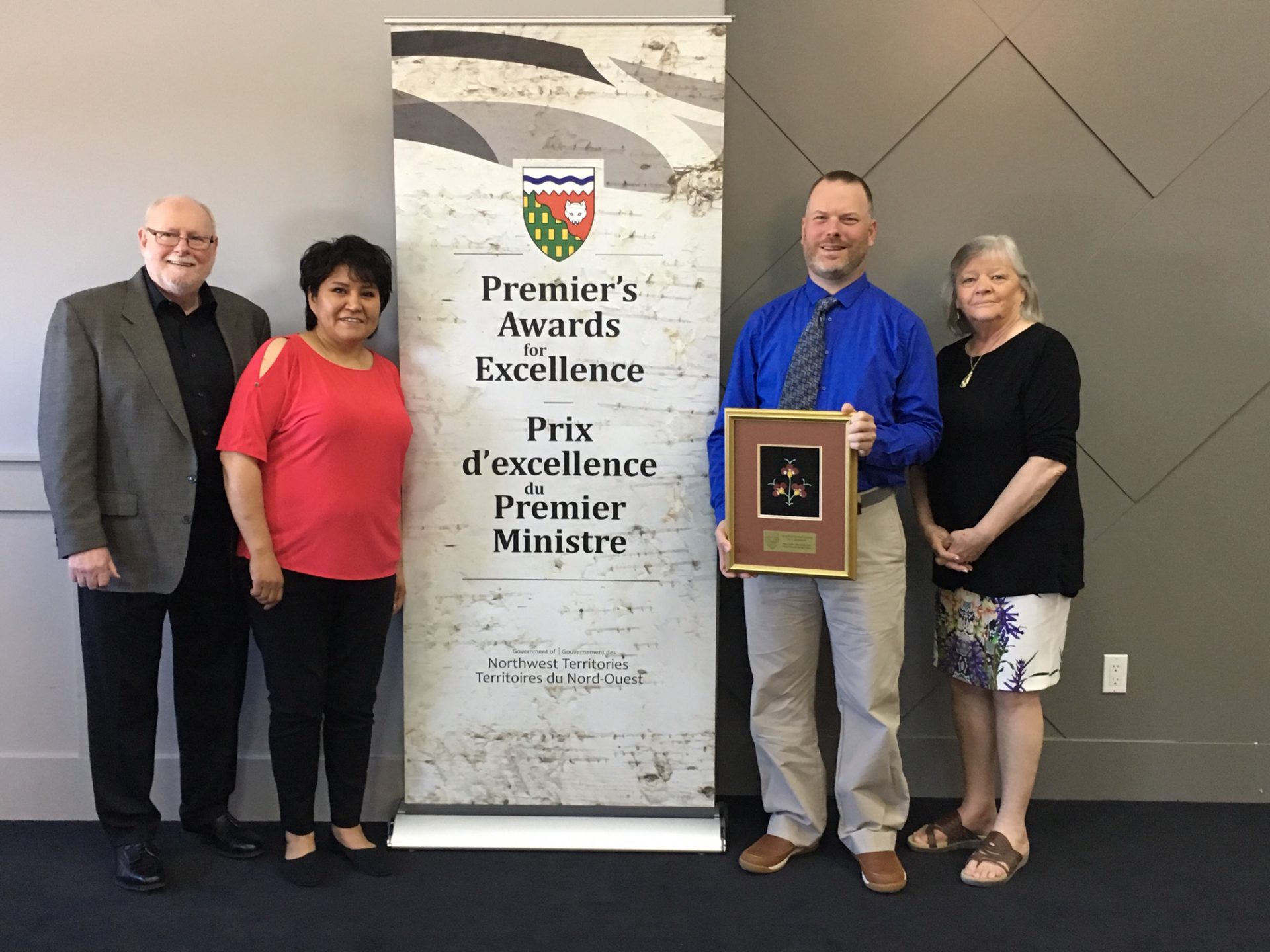
INUVIK, NT – Erika Hille, special projects coordinator and librarian at Aurora Research Institute (ARI), the research division of Aurora College, was awarded a POLAR Northern Resident Scholarship by the Association of Canadian Universities of Northern Studies (ACUNS) earlier this month.  This award supports full-time graduate students that are long-term residents of Nunavut, Northwest Territories, Yukon, or the Provincial North, and engaged in research.  Scholarship recipients must demonstrate the benefits of their proposed research, considerable commitment to the North and northern studies, and community outreach in combination with a strong academic record, written application, and references.

In addition to her nine years with ARI, Erika began her PhD in 2019 with Queens University. Her PhD research project, entitled “The geochemical responses of Arctic freshwater systems to regional variability in permafrost thaw across the Canadian Arctic” will examine how and why the sensitivity of aquatic systems in response to permafrost thaw varies between different permafrost landscapes.  Her research focuses on the Beaufort Delta Region of the western Canadian Arctic, an area experiencing dramatic landscape change associated with permafrost thaw.  Erika plans to compare her results to watersheds less sensitive to permafrost thaw, including the Apex River Watershed (Iqaluit) and the Meacham River Watershed (Resolute). 

— 30 —

Aurora Research Institute (ARI) is the research division of Aurora College.  The mandate of ARI is to improve the quality of life for residents of the Northwest Territories by applying scientific, technological and Indigenous knowledge to solve northern problems and advance social and economic goals. To achieve this mandate ARI conducts, supports, and licenses research throughout the NWT.  ARI is headquartered in Inuvik, and has regional research centres in Inuvik, Yellowknife and Fort Smith. Website: www.nwtresearch.com

For more information, please contact:
Jayne Murray                                                                           
Manager, Communications & College Relations 
Aurora College                                                             
Phone: 867-872-7021                                                    
Email: jmurray@auroracollege.nt.ca   


La coordonnatrice des projets spéciaux du Collège Aurora reçoit la bourse POLAIRE pour résidents du Nord de l’Association universitaire canadienne d’études nordiques
POUR DIFFUSION IMMÉDIATE
Le 7 juillet 2020

Inuvik (TNO) – Erika Hille, coordonnatrice des projets spéciaux et bibliothécaire à l’Institut de recherche Aurora (IRA), la branche du Collège Aurora qui se consacre à la recherche, a reçu la bourse POLAIRE pour résidents du Nord de l’Association universitaire canadienne d’études nordiques, plus tôt ce mois-ci. Ce prix aide les étudiants des collèges ou des universités, résidents de longue date du Nunavut, des Territoires du Nord-Ouest, du Yukon ou du nord d’une province et qui font de la recherche. Le lauréat doit démontrer les avantages de sa proposition de recherche, son engagement envers le Nord et les études nordiques, ainsi que son apport à la communauté. Il doit afficher un excellent dossier scolaire, et présenter une demande écrite appuyée par des références.

Mme Hille travaille à l’IRA depuis neuf ans et a commencé un doctorat en 2019 à l’Université Queens. Sa thèse de doctorat, intitulée « The geochemical responses of Arctic freshwater systems to regional variability in permafrost thaw across the Canadian Arctic – Réactions géochimiques des systèmes d’eau douce de l’Arctique aux variations régionales du dégel du pergélisol dans l’Arctique canadien » étudiera la variation de la sensibilité des systèmes aquatiques au dégel du pergélisol des différents types de pergélisol. Ses recherches se concentrent sur la région de Beaufort-Delta dans l’ouest de l’Arctique canadien, une région qui a connu des changements de paysage très importants en lien avec le dégel du pergélisol. Mme Hille souhaite comparer ses résultats à ceux des bassins hydrographiques moins sensibles au dégel du pergélisol, notamment le bassin hydrographique de la rivière Apex (Iqaluit) et celui de la rivière Meacham (Resolute).

— 30 —

L’Institut de recherche Aurora (IRA) est la branche du Collège Aurora qui se consacre à la recherche. Les recherches qu’il entreprend ont toujours pour but d’améliorer la qualité de vie des Ténois par l’application de connaissances scientifiques, techniques et autochtones qui permettent de résoudre les problèmes propres au Nord et de progresser vers l’atteinte d’objectifs sociaux et économiques. Pour réaliser ce mandat, l’IRA mène et soutient des projets de recherche dans l’ensemble des Territoires du Nord-Ouest et octroie les licences nécessaires. Son administration centrale se situe à Inuvik et il possède des centres de recherche régionaux à Inuvik, à Yellowknife et à Fort Smith. Site Web www.nwtresearch.com.

Pour en savoir plus, communiquez avec :
Jayne Murray                                                                           
Gestionnaire des communications et des relations du Collège     
Collège Aurora                                                             
Tél. : 867-872-7021                                                       
Courriel : jmurray@auroracollege.nt.ca

2020 Preceptor of the Year chosen by Aurora College’s BSN program

FOR IMMEDIATE RELEASE
May 25, 2020

YELLOWKNIFE, NT – Laura McBride, Clinical Coordinator for the Surgical Unit of Stanton Territorial Hospital, has been chosen as the 2020 Preceptor of the Year for the Bachelor of Science in Nursing (BSN) program at Aurora College. She was nominated by graduating BSN student John Mark (JM) Mabilog.

The Preceptor of the Year award is presented annually by the Aurora College BSN program to a preceptor who goes above and beyond expectations in promoting student learning and achievement, serves as an outstanding role model for Registered Nursing practice, promotes the preceptor role among colleagues in practice, and demonstrates excellence in teaching and learning. Graduating students are invited to submit a nomination letter for a preceptor they feel meets these qualifications.

In addition to the above criteria, Mabilog describes McBride as being a caring preceptor who creates a supportive environment and provide many opportunities for students to meet their personal learning goals. Faculty note McBride’s efforts to support her colleagues in fulfilling the preceptor role and her ability to give the feedback necessary for students to grow into excellent practitioners. McBride has preceptored Aurora College BSN students for several years.

Aurora College’s Bachelor of Science in Nursing program faculty and students congratulate Laura McBride on receiving this award, which was presented at Stanton Hospital recently as part of the National Nursing Week celebrations.

Aurora College appreciates and recognizes all of our preceptors, as well as the practicum and clinical supervisors who provide mentorship, guidance, and professional wisdom to all of the students in our School of Health and Human Services programs. Aurora College is accepting applications for programs beginning in fall 2020. Apply online at www.auroracollege.nt.ca

Quotes:

“Aurora College is grateful to Laura McBride and all preceptors who graciously teach and mentor nursing students. Our program success relies on their commitment. Volunteering to be a preceptor is an additional responsibly to working nurses, especially during a pandemic. Preceptors are role models and have a lasting impact on student learning, Aurora College appreciates and honours preceptors. Happy Nurses Week!”
-Jodi Brennan, Chair, School of Health and Human Services, Aurora College

— 30 —

Aurora College delivers academic upgrading, trades and industrial training, certificate, diploma and degree programs to more than 3,000 full and part-time students at three campuses, 21 Community Learning Centres and other community sites in the Northwest Territories. Community-centred post-secondary programs reflect Northern culture and the needs of the Northern labour market. Aurora College’s research division, Aurora Research Institute, conducts, supports, and licenses research in the NWT. Research centres are located in in Inuvik, Yellowknife and Fort Smith.

For more information, please contact:
Jayne Murray                                                                           
Manager, Communications & College Relations 
Aurora College                                                             
Phone: 867-872-7021                                                   
Email: jmurray@auroracollege.nt.ca

Celebrating students and faculty during National Nursing Week

FOR IMMEDIATE RELEASE
May 11, 2020

YELLOWKNIFE, NT – Aurora College is inviting residents of the NWT to help celebrate our nursing students and faculty during National Nursing Week, May 11-17, 2020.

This year’s theme – Nurses: A Voice to Lead – Nursing the World to Health – is especially poignant in 2020 as the world has watched nurses bravely take on various leadership roles on the front lines of the COVID-19 response, putting their own health and safety at risk to help and save others. Standing alongside Registered Nurses and Licensed Practical Nurses on the front lines are Personal Support Workers, who perform hands-on daily care for our most vulnerable citizens.

This year’s graduates are entering their professional careers during an unprecedented situation. In addition to the normal course work, practicum and clinical experiences, and national and College exams, they took on extra responsibilities supporting the territory’s pandemic response. Students became COVID-19 screeners at hospitals and primary health care facilities, were support workers at various facilities, and provided support wherever requested by the health care system.

During National Nursing Week, Aurora College’s School of Health and Human Services (HHS) will be holding several virtual events for students, graduates, and faculty. These will include announcing the recipient of the Preceptor of the Year Award, and of the Academic and Clinical Excellence Award, which is presented by the Registered Nurses Association of NWT and Nunavut to a graduating Bachelor of Science in Nursing student.

This year, 39 students are expected to graduate from the School of Health and Human Services at the College: Bachelor of Science in Nursing – 22; Personal Support Worker Certificate – 9; Practical Nursing Diploma – 3; Post-graduate Certificate in Remote Nursing – 3; and Community Health Representative Certificate – 2. Including the 2020 cohort, Aurora College has seen more than 350 nurses and more than 180 personal support workers graduate from its programs. The majority of those graduates have remained in the north, and have consistently provided first-class care to their clients. Aurora College graduates are working in every hospital, health care facility, and long-term care home in the territory, as well as in the majority of NWT communities.

Aurora College’s HSS programs could not provide the level and quality of education they do without the continued support of our many partners, including our preceptors (experienced nurses who serve as mentors and role models for students); the hospitals, health care facilities and long-term care facilities that provide practicum placements; the various professionals and Elders who share their wisdom through guest lectures and on-the-land experiences; and our partner in the Bachelor of Science in Nursing program – the University of Victoria.

The World Health Organization has also designated 2020 as Year of the Nurse and Midwife in honour of the 200th anniversary of Florence Nightingale’s birth.

Applications are being accepted for Aurora College programs that begin in this fall. Apply online at www.auroracollege.nt.ca

Quotes:

“Aurora College is incredibly proud of the students and faculty in our Nursing and Personal Support Worker programs for the way they have contributed to the response to the pandemic. Their professionalism, caring and commitment, especially during this challenging time, is inspiring.”
–              Andy Bevan, President, Aurora College

“Our students have shown such adaptability and resiliency during this time of uncertainty – they are our leaders of the future. I encourage students to embrace their new learning and use their voice; we know they are ready to shine.”

“Our small and mighty faculty is willing to tackle whatever is ahead for providing excellence in education – they lead our students by example and are absolutely awesome!”

–  Jodi Brennan, Chair, School of Health and Human Services

— 30 —

Aurora College delivers academic upgrading, trades and industrial training, certificate, diploma and degree programs to more than 3,000 full and part-time students at three campuses, 21 Community Learning Centres and other community sites in the Northwest Territories. Community-centred post-secondary programs reflect Northern culture and the needs of the Northern labour market. Aurora College’s research division, Aurora Research Institute, conducts, supports, and licenses research in the NWT. Research centres are located in in Inuvik, Yellowknife and Fort Smith.

For more information, please contact:
Jayne Murray                                                                           
Manager, Communications & College Relations 
Aurora College                                                             
Phone: 867-872-7021                                                    
Email: jmurray@auroracollege.nt.ca       

Funding received to assess sites for potential wind power generation

FOR IMMEDIATE RELEASE
March 11, 2020

INUVIK, NT – Aurora College is one of six colleges to share in the Canada Foundation for Innovation’s College-Industry Innovation Fund awards announced recently by William Amos, Parliamentary Secretary to the Minister of Innovation, Science and Industry.

Aurora College’s research division, Aurora Research Institute (ARI), has been awarded $170,375 through the Canada Foundation for Innovation’s College-Industry Innovation Fund to conduct wind assessment research with a Light Detection and Ranging (LiDAR) wind monitoring unit.

LiDAR technology is ideal for use in remote and northern locations, as it is mobile and can be deployed more quickly and at less cost than the wind towers traditionally used for site assessment studies. Reduced time and costs for site assessments may encourage more private sector partnerships in developing wind energy projects in the Northwest Territories and other remote communities across Canada.

Wind energy holds a great deal of promise as a more economical and environmentally-friendly electricity-generating option than the current diesel-powered generation plants in remote communities across the NWT and much of northern Canada. This investment will help to further understand the benefits of using LiDAR technology for wind studies in remote and northern conditions.

Quotes:

 “Wind energy technology can help communities decrease their reliance on diesel fuel for electricity generation while also reducing greenhouse gas emissions. Wind power can offer more stable pricing for electricity, which would benefit individuals, communities, and businesses.”
–              Joel McAlister, Acting Vice President, Research, Aurora College

— 30 —

Aurora Research Institute (ARI) is the research division of Aurora College.  The mandate of ARI is to improve the quality of life for residents of the Northwest Territories by applying scientific, technological and Indigenous knowledge to solve northern problems and advance social and economic goals. To achieve this mandate ARI conducts, supports, and licenses research throughout the NWT.  ARI is headquartered in Inuvik, and has regional research centres in Inuvik, Yellowknife and Fort Smith. Website: www.nwtresearch.com

For more information, please contact:

Jayne Murray                                                                           
Manager, Communications & College Relations 
Aurora College                                                             
Phone: 867-872-7021                                                    
Email: jmurray@auroracollege.nt.ca   

Researchers hope to reduce domestic homicides within vulnerable populations

FOR RELEASE ON:
September 25, 2019

YELLOWKNIFE, NT – In an effort to help reduce domestic homicides, a national research team with an NWT connection is embarking on a plan to interview 200 survivors of severe domestic violence, as well as family members and friends who have lost someone to domestic homicide between 2006 and 2016, for which there are no current or pending court or coroner investigations.

Dr. Pertice Moffitt, Aurora Research Institute’s Manager of Health Research Programs, is a co-investigator and Pan-Territorial Coordinator of the Canadian Domestic Homicide Prevention Initiative for Vulnerable Populations (CDHPIVP; www.cdhpi.ca). Annamieke Mulders, Director of Programs, Research and Advocacy with the Status of Women Council in the NWT, and Lyda Fuller, Executive Director of the YWCA NWT, are Supporters of this project. The study is focused on one or more of the four groups – Indigenous Peoples; immigrants and/or refugees; people living in rural, remote, and/or northern communities; and children exposed to domestic violence or parents/caregivers of children killed in the context of domestic violence.

The national research team funded by the Social Sciences and Humanities Research Council’s Partnership Development Grant program – led by University of Guelph sociology professor Dr. Myrna Dawson and Western University education professor Dr. Peter Jaffe – is trying to reduce these deaths through research, broader public awareness, and professional training. 

Family violence accounts for 26 percent of all violent crimes in Canada (Burczycka & Conroy, 2018). One of the most common forms of family violence is domestic violence, which is a gendered crime in Canada.  Women account for about 80 percent of victims of domestic violence and domestic homicide. In 2017, 84 percent of domestic homicide victims were female. The rate of domestic homicide was five times greater for females than for males (Beattie, David & Roy, 2018). These domestic homicides appear preventable and predictable with hindsight because the vast majority are preceded by warning signs seen by friends, family, co-workers and community professionals such as police and social service providers.

While researchers have recently identified risk factors associated with domestic violence and homicide, much less is known about risk factors for vulnerable populations who experience higher rates of violent victimization. Women are at a higher risk of domestic violence, but the threat is even greater for Indigenous women (First Nations, Métis, and Inuit), those living in rural/remote or northern areas of the country, immigrant and refugee women and children exposed to domestic violence. These groups also experience various barriers that can make it more difficult for them to report domestic violence and access necessary services.

The CDHPIVP research-community partnership involves experts from more than 60 community service organizations, government departments and universities who have come together to address these issues and hopes to better understand underlying factors contributing to domestic homicide within these at-risk groups.

Since the CDHPIVP inception in 2015, there has been tremendous efforts working with provincial and territorial coroners and medical examiners to develop a national data base (see attached infographics for domestic homicide data from 2010 to 2018 based on court and media data). More than three hundred interviews have been conducted with service providers in different justice and community agencies across the country to identify the barriers to effective risk assessment, safety planning and risk management in domestic violence cases. This research study will offer a perspective on behalf of victims and survivors of domestic violence. 

Participants for the study must be at least 18 years and willing to have their interview audio-recorded. People can share their story with our team by phone, video conference, or in-person at the Aurora Research Institute’s North Slave Research Centre or at a CDHPIVP partner agency. If needed, translation services are available, and travel and/or childcare costs will be covered. Participants will receive a $50 honorarium for sharing their story. All interviews are confidential and the team will work with participants to protect their privacy. The study has been approved by the University of Guelph and Western University Research Ethics Boards.

Quotes

“This is important research for northerners; together we will find solutions and responses that fit our context and work to prevent violence.”

  • Dr. Pertice Moffitt, Manager and Instructor, Health Research Programs, Aurora College/Aurora Research Institute

“This research is crucial because it can save lives through enhanced policies and services in community responses to domestic violence.”

  • Dr. Myrna Dawson, Sociology Professor and Director of the Centre for the Study of Social and Legal Responses to Violence, University of Guelph

“Nationwide, collaborative efforts will allow us to identify unique, individual and community-level risk factors for violence for particular vulnerable populations. Assessing and managing risk for these and other groups is crucial to preventing deaths that occur in the context of domestic violence.”

  • Dr. Peter Jaffe, Education Professor and Director of Centre for Research & Education on Violence Against Women & Children, Western University

— 30 —

Aurora Research Institute (ARI) is the research division of Aurora College.  The mandate of ARI is to improve the quality of life for residents of the Northwest Territories by applying scientific, technological and Indigenous knowledge to solve northern problems and advance social and economic goals. To achieve this mandate ARI conducts, supports, and licenses research throughout the NWT.  ARI is headquartered in Inuvik, and has regional research centres in Inuvik, Yellowknife and Fort Smith. Website: www.nwtresearch.com

For more information, please contact:
Jayne Murray                                                                                                    
Manager, Communications & College Relations 
Aurora College                                                                                 
Phone: 867-872-7021                                                                     
Email: jmurray@auroracollege.nt.ca                       

Dr. Pertice Moffitt
Manager/Instructor, Health Research Programs
Aurora Research Institute
Aurora College
Phone: 867-920-3052
Email: PMoffitt@auroracollege.nt.ca

or email Julie Poon at jpoon@uoguelph.ca  or Anna-Lee Straatman at astraat2@uwo.ca  

Aurora College Awarded Applied Research and Tools Instrument Grant through Natural Sciences and Engineering Research Council of Canada

FOR IMMEDIATE RELEASE/FOR RELEASE ON
August 30, 2019

Inuvik, NT –The research division of Aurora College, Aurora Research Institute (ARI), has been awarded $150,000 for an Applied Research Tools and Instruments grant through the Natural Sciences and Engineering Research Council of Canada’s (NSERC) College and Community Innovation Program.

The grant supports the purchase of research equipment for the Application of UAV LiDAR Systems to the Monitoring and Mapping of the Effects of Climate-Driven Changes on Western Arctic Communities project.

The funds will be used to purchase an unmanned aerial vehicle (UAV) and light detection and ranging (LiDAR) system that will support the investigation, mapping, recording and monitoring of the effects of climate-driven changes on northern communities. Used together, the UAV and LiDAR system is a geomatics tool that has multiple applications including, but not limited to: producing high-resolution 3D maps of urban and remote areas, measuring snow depth, monitoring permafrost thaw, measuring ice thickness, and monitoring ice road maintenance.

The Applied Research and Tools Instrument grants provide financial support for colleges to purchase research equipment that enhances the capacity for applied research, innovation and training. One of the objectives of the grant is for colleges to collaborate with small and medium-sized enterprises. ARI currently hosts a UAV program in Inuvik that supports its researchers and partners, as well as provides training to northern communities. With this equipment, ARI will be better equipped to develop collaborative, community-based, and regionally-relevant research programs and provide training opportunities for northern students and Indigenous research partners, as well as support private sector partnerships.

Quotes:

 “NSERC values the tremendous contributions of Canada’s colleges in the research and innovation ecosystem. Today’s investment will enhance our country’s world-class research capacity, help businesses innovate to create growth, and train our next generation of researchers and entrepreneurs.”
–              Dr. Marc Fortin, Vice-President, Research Partnerships, Natural Sciences and Engineering Research Council of Canada

“Aurora Research Institute (ARI) looks forward to implementing the new UAV and LiDAR system to support research in the Western Arctic. With a more advanced and complex system, ARI and its partners can develop applications more suitable for the Arctic environment.”

-Pippa Seccombe-Hett, Vice President, Research, Aurora College

— 30 —

Aurora Research Institute (ARI) is the research division of Aurora College.  The mandate of ARI is to improve the quality of life for residents of the Northwest Territories by applying scientific, technological and Indigenous knowledge to solve northern problems and advance social and economic goals. To achieve this mandate ARI conducts, supports, and licenses research throughout the NWT.  ARI is headquartered in Inuvik, and has regional research centres in Inuvik, Yellowknife and Fort Smith.

For more information, please contact:
Jayne Murray                                                                           
Manager, Communications & College Relations 
Aurora College                                                             
Phone: 867-872-7021
Email: jmurray@auroracollege.nt.ca

$1.75 M to support Arts, Crafts, Technology & Micro-Manufacturing Centre Aurora College awarded multi-year NSERC Technology Access Centres grant

FOR RELEASE ON
June 13, 2019

INUVIK, NT – Aurora College will be receiving $1.75 million over five years to support the Arts, Crafts, Technology, and Micro-Manufacturing Centre (ACTMC) in Inuvik.

The ACTMC is a collaborative endeavour that provides the space, equipment, training and ongoing support to artists in the Beaufort Delta who are interested in merging their artistry with modern technology and micro-manufacturing techniques.  The centre provides a fully-equipped and resourced space where artists can access new technologies to grow their small businesses and pursue existing and emerging economic opportunities.

Earlier today, the Honourable Kirsty Duncan, Minister of Science and Sport, announced that ARI is one of this year’s recipients of a Technology Access Centre (TAC) grant through the National Sciences and Engineering Research Council of Canada (NSERC)’s College and Community Innovation program.

The Arts, Crafts, Technology and Micro-Manufacturing Centre was opened in April 2019 and has become a hub of activity and training for local and regional artisans. The five-year TAC grant will provide funds for a manager, administrator, and basic operating expenses, ensuring the project can be sustained while it establishes more permanent revenue sources. Arts & Crafts is an underdeveloped segment of the economic landscape in the Beaufort Delta that has the potential to grow substantially.

The idea for the micro-manufacturing facility grew out of the Merging Arts and Crafts with Technology and Manufacturing program, a 10-week course that introduced existing and aspiring artisans to the potential artistic and economic benefits of micro-manufacturing. The first program, offered in January 2018 in Inuvik, was so popular that a second program was offered in October 2018. Planning for both the course and the centre included a number of organizations in the Inuvialuit Settlement Region and the Gwich’in Settlement Area. ACTMC partners include the Inuvialuit Regional Corporation (IRC), the Gwich’in Tribal Council (GTC), the Inuvialuit Community Economic Development Organization (ICEDO), the Town of Inuvik, and the Government of the Northwest Territories.

An official opening of the centre is planned for later this year.

Quotes:

“Art is a significant economic driver in the Beaufort Delta: approximately 1,400 residents produce arts and crafts for sale, 600 of those in Inuvik alone. With these investments, artists in the Beaufort Delta Region will have the opportunity to improve their art skills, produce high quality products, and develop sustainable business ventures. This project would not have been possible with the support and involvement of our many partners.”

  • Dr. Tom Weegar,  President, Aurora College

“TAC Grants are intended to enhance the ability of companies to become more productive and innovative by enabling them to easily access college expertise, technology and equipment. Aurora College’s contributions will include specialized technical assistance, applied research and/or development projects, and specialized training.”

  • Pippa Seccombe-Hett, Vice President – Research, Aurora College

— 30 —

Aurora Research Institute (ARI) is the research division of Aurora College.  The mandate of ARI is to improve the quality of life for residents of the Northwest Territories by applying scientific, technological and Indigenous knowledge to solve northern problems and advance social and economic goals. To achieve this mandate ARI conducts, supports, and licenses research throughout the NWT.  ARI is headquartered in Inuvik, and has regional research centres in Inuvik, Yellowknife and Fort Smith.

Aurora Research Institute Staff Receives ‘Making a Difference’ Award from Canadian Association of Science Centres

FOR IMMEDIATE RELEASE/FOR RELEASE ON
May 13, 2019

INUVIK, NT – Annika Trimble, Outreach Coordinator at the Western Arctic Research Centre (WARC) with Aurora Research Institute (ARI), was awarded a ‘Making a Difference’ award from the Canadian Association of Science Centres (CASC) annual conference on May 10th. Each year CASC recognizes outstanding people, programs and exhibits in Canada’s science centres, museums, aquariums and planetariums. Annika shares her passion for science with the public by developing culturally sensitive programs that merge science and traditional knowledge. Her school outreach includes hands-on interactive lessons aimed at increasing interest and improving knowledge in STEM (Science, Technology, Engineering, and Math) subjects. Students have the opportunity to participate in engaging STEM lessons and use some of the latest technologies in education, such as coding and 3D design and printing. In the past year, Annika organized and delivered over 140 outreach programs in the schools reaching almost 3000 students in the Beaufort Delta region.

— 30 —

Aurora Research Institute (ARI) is the research division of Aurora College.  The mandate of ARI is to improve the quality of life for residents of the Northwest Territories by applying scientific, technological and Indigenous knowledge to solve northern problems and advance social and economic goals. To achieve this mandate ARI conducts, supports, and licenses research throughout the NWT.  ARI is headquartered in Inuvik, and has regional research centres in Inuvik, Yellowknife and Fort Smith.

For more information, please contact:
Jayne Murray
Manager, Communications & College Relations
Aurora College
Phone: 867-872-7021
Email: jmurray@auroracollege.nt.ca

Hotıì ts’eeda and Aurora College announce Allison Forbes as recipient of 2019 Edets’seèhdzà studentship

Yellowknife (April 30, 2019) The inaugural Edets’seèhdzà Studentship has been awarded to third-year Bachelor of Nursing student Allison Forbes from Yellowknife. The Studentship is a $20,000 stipend that supports a returning Aurora College student to be involved in health research during their studies.

The Edets’seèhdzà Studentship award is funded by Hotıì ts’eeda, and provided through a partnership between Hotıì ts’eeda, Aurora College and Aurora Research Institute. Hotıì ts’eeda is a CIHR-funded research support unit hosted by the Tłı̨chǫ Government. Edets’seèhdzà [eh-dey-tsay-zah] means “stepping forward to challenge yourself” in the Tłı̨chǫ language.

Through the stipend, Forbes will be able to participate in Indigenous health research in the NWT. This work will support her long-term career goal of becoming a community health nurse. Forbes will be working with Aurora Research Institute Manager of Health Research Programs, Dr. Pertice Moffitt on several projects to broaden her perspective on Indigenous and northern health and research.

Through the Edets’seèhdzà Studentship, we’re providing support to students gain deep and meaningful involvement in health and wellness research in the NWT. Our goal is to build the skills and capacity of homegrown researchers and health professionals to shape the health research landscape.”

-Dr. John B. Zoe, Chairperson, Hotıì ts’eeda

“Aurora College and Aurora Research Institute are proud to support initiatives that strengthen research capacity in the NWT by providing Aurora College students an opportunity to engage in research while pursuing their studies.  The Edets’seèhdzà Studentship is an amazing partnership between connected organizations with this goal in mind. We are proud of Allison and look forward to her future accomplishments.”

-President, Aurora College

To learn more visit: nwtspor.ca/studentship. 

Inquiries can be directed to Rachel MacNeil at 1-867-766-4003 x 1001 or rachelmacneill@tlicho.com