
Search

Introduction to Heavy Equipment Operator in Kátł’odeeche FN

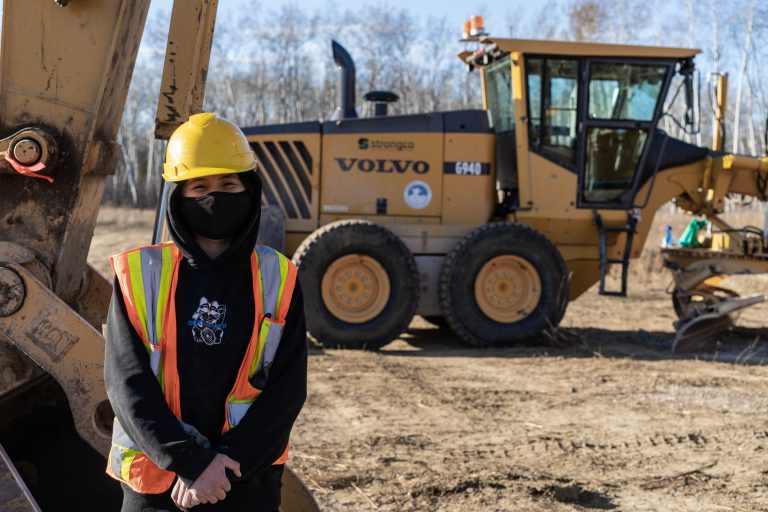
This summer, Aurora College’s School of Trades, Apprenticeships and Industrial Training will be bringing its incredibly popular Introduction to Heavy Equipment Operator program to Kátł’odeeche First Nation. The course dates are June 27 through August 9, 2022.

This in-community delivery of the Introduction to Heavy Equipment Operator program will utilize a six day per week, 10 hours per day format to enable students to complete 100 hours of training on each of two selected pieces of equipment, along with 60 hours of classroom instruction within the five-week course.

Interested applicants are encouraged to apply early as space is limited.

***Priority will be given to Kátł’odeeche First Nation beneficiaries.***

Note: The Introduction to Heavy Equipment Operator Program is limited to Class 5 equipment only. For Class 1 and 3 training, students must attend either the 6-week Class 1 Training or the full Heavy Equipment Operator Program offered at Thebacha Campus in Fort Smith.


APPLY NOW FOR THE SUMMER TERM!

Program Eligibility

The eligibility requirements for all three heavy equipment operator programs are the same.
Applicants may be admitted into the Heavy Equipment Operator program based one of the
following pathways: academic pathway or experiential/mature student pathway.

Academic Pathway:

Applicants may be considered for admission who:

  • Are 18 years of age or older; and
  • Have been enrolled in English 10-2; and
  • Have been enrolled in Math 10C.

Applicants who have completed the Aurora College Occupations and College
Access Program (OCAP) and have successfully completed:

  • Aurora College English 130; and
  • Aurora College Math 130.

Equivalencies and other post-secondary education may be considered.

Experiential/Mature Student Pathway:
Applicants who are 20 years or older, have been out of school for at least one
year, and have relevant work/life experience in the heavy equipment operator
field may be considered for admission. Eligibility for the program may be
determined through an interview, an assessment of reading comprehension, a
review of the applicant’s resume, or other means.

Regardless of the pathway for admission, all applicants must:

  • Submit official transcripts from high school and/or post-secondary education, as
    applicable.
  • Possess a valid Class 5 Driver’s License prior to entry into the program. A
    probationary Class 5 Driver’s License is not acceptable. A restricted license may
    limit the applicant’s training equipment and licensing potential.
  • Submit a current driver’s license abstract (can be obtained from the GNWT
    Department of Transportation and Vehicle Licensing Office).

Depending on the applicant’s pathway, they may be requested to:

  • Submit a resume or other evidence of relevant work/life experience.
  • Participate in an interview.
  • Complete an assessment of reading comprehension.

Based on screening in the above areas, applicants may be advised that they are
“conditionally accepted”. If applicants are “conditionally accepted” into the program,
they may also be required to submit proof that they have passed a Class 3 or Class 1
GNWT Driver’s Medical Exam.

NOTE 1. Applicants are not required to obtain a medical for their initial application. After
screening, applicants who will be training on Class 1 or Class 3 equipment, will be advised
to pass a Class 1 or Class 3 Driver’s Medical in order to become fully accepted in the
program.

NOTE 2. For entry into the HEO program, either a Class 1 or Class 3 Driver’s Medical is
acceptable. The criteria for both medicals are similar, so it may be advantageous for a
student to get a Class 1 Driver’s Medical if they anticipate pursuing a Class 1 License in
the future.


For more information, please contact:

Christine Abela
867-874-3107
cabela@auroracollege.nt.ca


#We AnswerTheCall National Nursing Week 2022

YELLOWKNIFE, NT – During National Nursing Week, May 9-15, 2022, Aurora College is celebrating and recognizing our nursing students, faculty, graduates, community partners and all nursing professionals who have worked diligently to provide high quality care, especially during the COVID-19 pandemic.  

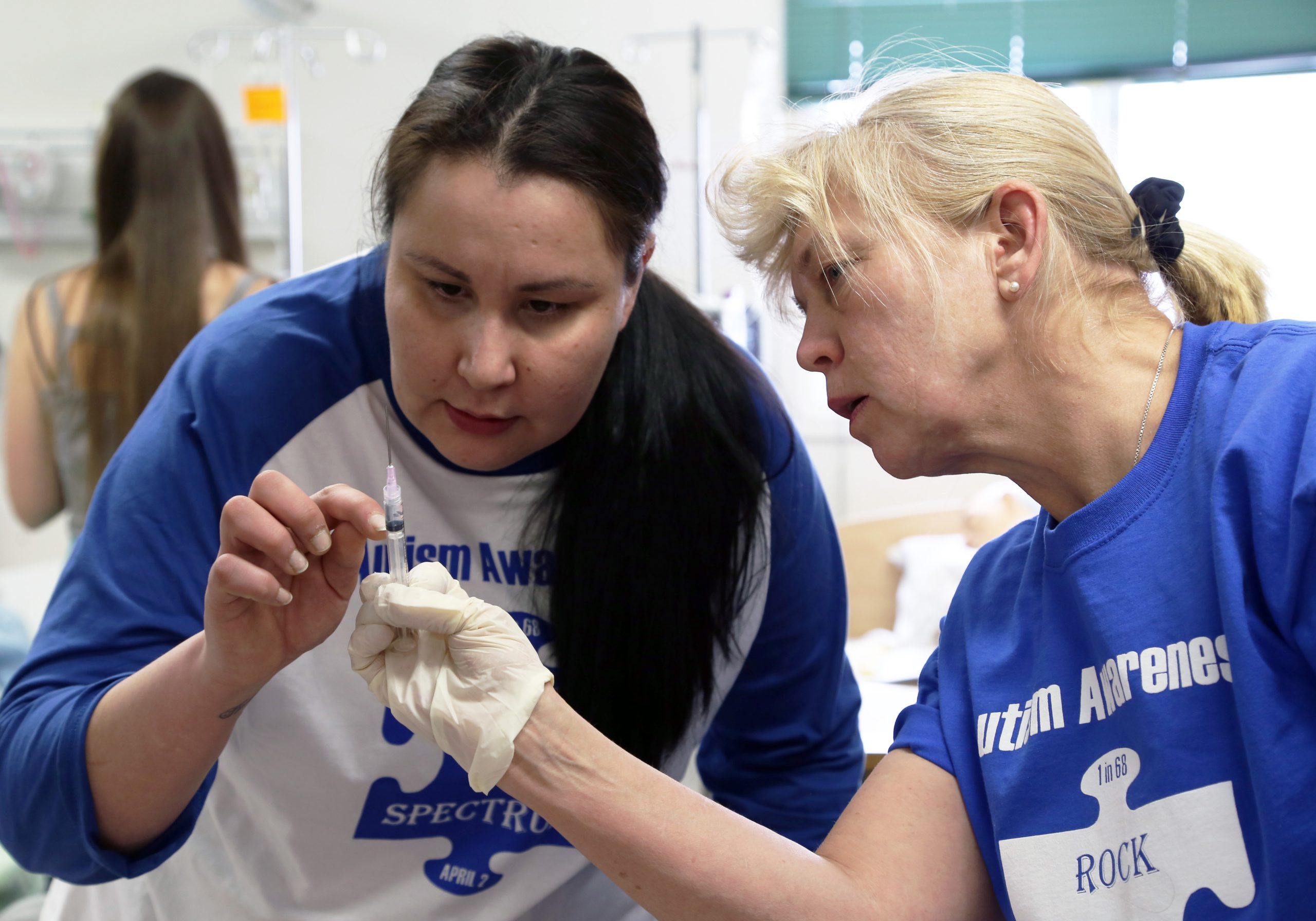
The College’s current and recent graduates are entering their careers in unprecedented times. During their nursing education, they have taken on responsibilities supporting the territory’s pandemic response by assisting with COVID-19 screening, vaccinating for influenza and COVID-19, working as COVID-19 screeners at hospitals and primary health care facilities, supporting workers at various facilities, and providing support wherever requested within the health care system.

Aurora College is very fortunate to have a nursing faculty and staff who are dedicated and committed to not only their students, but to their chosen profession, and who lead by example, personifying the professionalism and qualities necessary to deliver high quality and compassionate client care.

The majority of Aurora College’s nursing graduates have remained in the North, and have consistently provided first-class care to their patients. Graduates are working in every hospital and in many health care centres, long-term care facilities, and in public, home and community care in the Northwest Territories.

Despite the stress and extra challenges of providing quality health care during a pandemic, the College’s partners have not wavered in their commitment to helping students become their best professional selves. Aurora College’s health programs could not provide the same level and quality of education without their continued support. These include preceptors (experienced nurses who serve as mentors and role models for students); the hospitals, health care facilities and long-term care facilities that provide practicum placements; the various professionals and Elders who share their wisdom through program advising, classroom teaching and on-the-land experiences. Aurora College continues to partner with the University of Victoria, which provides our nursing students with the opportunity to attain a baccalaureate degree in nursing while living in the NWT, using a quality curriculum.

This year’s theme was developed by the Canadian Nurses Association to showcase the many roles that nurses play in a client’s health-care journey. The pandemic brought to light the courage and commitment that nurses bring with them every day and to every situation, and showed the important role that nurses play in their communities.

ECE Minister R.J. Simpson announces appointment of new Aurora College president

From gov.nt.ca

Yellowknife — April 1, 2022

Minister R.J. Simpson today announced that Dr. Glenda Vardy Dell will be appointed president of Aurora College, effective April 4, 2022. 

Dr. Vardy Dell has been with Aurora College since 2019 and has served in the roles of senior advisor to the president/interim director of the Center for Teaching and Learning as well as vice president of Education and Training.  Dr. Vardy Dell brings a wealth of experience in the fields of health sciences and post secondary leadership to her new role.

The appointment of Dr. Vardy Dell to the role of president also marks a step towards the intended arms-length relationship between the Government of the Northwest Territories and Aurora College.  Dr. Vardy Dell will assume responsibility for the overall operations of the college, while the Aurora College Transformation initiative will continue to be led by the department of Education, Culture and Employment’s (ECE) Aurora College Transformation Team in partnership with Dr. Vardy Dell and the college.

Dr. Vardy Dell will be replacing Mr. Andy Bevan, who indicated his plans to retire earlier this year.

Mr. Bevan was named president of Aurora College and associate deputy minister of Post-Secondary Education Renewal with ECE in February 2020 and provided strong leadership through the first phase of transforming Aurora College to a polytechnic university.  His tenure has seen the development of a 3-Year Strategic Plan, the first ever 3-Year Academic Plan, and a 3-year Strategic Enrolment Management Plan to increase student success.  Thanks to Mr. Bevan’s guidance, the 2025 transformation remains on track and is well-positioned to take on the challenges of Phase 2: Transformational Change.

In addition to his role as president of Aurora College and associate deputy minister of Post-Secondary Education, Mr. Bevan also served as the assistant deputy minister of Labour and Income Security with ECE, and as acting deputy minister of the department of Aboriginal Affairs and Intergovernmental Relations.

Administrator Denny Rodgers Announces President Andy Bevan’s Retirement

April 1, 2022

MEDIA STATEMENT

Aurora College Administrator, Denny Rodgers, released the following statement today.

“Aurora College President, Andy Bevan had advised me of his intention to retire earlier this year and today the Minister of Education, Culture and Employment announced his successor, Dr. Glenda Vardy Dell.

“I wish Andy and his family the very best as they embark on this new, exciting and hopefully restful chapter in their lives starting today.

“Andy Bevan took on the role of President of Aurora College two years ago and has guided it through the first phase of transformation and leaves the organization stronger and ready to undertake the next phase of transformational change. His contributions to the strengthening the foundation of Aurora College are greatly appreciated.

“Much of his leadership these past two years was managing the impact of COVID-19 and the challenges it presented. The College Team collectively changed how it teaches and how students learn with an incredible amount of innovation, dedication, compassion and imagination.

“Under his leadership, the College developed a three-year Strategic Plan, the first ever three-year Academic Plan, and a three-year Strategic Enrolment Management Plan was developed to increase student success. Transformation milestones included developing an Implementation Plan for Transformation and the Initial Areas of Teaching and Research Specialization for the polytechnic university and the passing of critical legislation providing for a tricameral governance model – the first of its kind in Canada. The transformation to a polytechnic university in 2025 remains on track.

I am confident that the College is well positioned to successfully continue along the transformation journey and with the same strong leadership team.

“I am pleased with today’s appointed of Dr. Glenda Vardy Dell as President of Aurora College and I welcome her to this new position.

“Dr. Vardy Dell has been working with Aurora College in many different capacities including Vice President, Education & Training, Senior Advisor to the President, and Director, Centre for Teaching and Learning.  At other post-secondary education institutions in Canada, she has held the positions of Dean, School of Health Sciences, and Associate Professor, and was the Executive Director of Nursing at Stanton Territorial Hospital. Dr. Vardy Dell’s knowledge of the North and post-secondary education is vast. 

PROOF OF VACCINATION, AND TESTING FOR NON-VACCINATED INDIVIDUALS NO LONGER REQUIRED BY AURORA COLLEGE

Based on the most recent public health directions from the Office of the Chief Public Health Officer and the GNWT, Aurora College will not be implementing the planned COVID-19 Student and Volunteer Vaccination Policy. We will also no longer be implementing the GNWT employee and contractor COVID-19 Vaccination policy, as of March 1 2022.

As a result, requirements for proof of vaccination and for testing of those who are not vaccinated will no longer be required effective March 1, 2022.

Please note, however, that some programs have pre-existing vaccination requirements for practicums and work experiences, such as the Bachelor of Science in Nursing, Practical Nurse, Personal Support Worker, and Early Learning and Child Care programs. Please contact your Program Head or Senior Instructor if you have questions about vaccination requirements for practicums.

While some processes are being relaxed, mandatory masking will remain in place for the foreseeable future.  All Aurora College students, employees, contractors, volunteers and visitors will still be required to wear masks in all areas of College facilities and worksites. In compliance with Health Canada recommendations, Aurora College now requires the use of 3-layer non-medical masking as a minimum standard.  This includes 3-layer blue disposable or cloth masks or the five-layer N95 or KN95 masks available commercially.  The use of neck warmers or less than three layer masks is now unacceptable at Aurora College facilities. The masking requirement will remain in place until further notice.

The processes and rules we have in place make our facilities very safe. However, as individuals we must remain cautious, conduct our own risk assessments, and continue to engage in healthy practices by masking, following good hand hygiene and respiratory practices, and using physical distancing where appropriate. It is still possible for further COVID-19 cases to occur and taking simple proactive measures like the ones mentioned here will help keep the risks low.

We appreciate the cooperation and efforts of students, employees and volunteers to be compliant with our policies under the public health orders. Going forward Aurora College will continue to be responsive to any changes that may occur in order to maintain the health and safety of the College community and the communities we serve.

If you have concerns regarding your mental or physical health, please speak with your instructor about your situation. You can also connect with Student Services on your campus for additional supports or visit the Student Toolkit for a list of wellness resources in your campus community.

As always, our top priority is the health, safety and wellbeing of our students, employees and communities. We thank you for your resiliency and your commitment to your studies.

Andy Bevan, President

RETURN TO FACE-TO-FACE CLASSES ON MONDAY, FEBRUARY 21, 2022

Aurora College is pleased that we will be resuming face-to-face classes in on Monday, February 21, 2022. All classes that are ordinarily face-to-face will return to that format as of February 21, 2022.

 The health, safety and wellbeing of students, employees and communities is our top priority.

 At the present time, masking is mandatory while on campus, and all individuals are required to observe proper physical distancing, hand washing and the use of hand sanitizer. Aurora College has an approved exception plan from the Office of the Chief Public Health Officer and we will be following all aspects of that plan. While in Aurora College locations, please follow all directional signs and campus directives for walking through hallways and common areas, and in the case of emergencies.

 Students will not be required to sign in when entering the buildings, but may be required to sign in to individual classes. All visitors will be required to sign in and provide contact information.

 We will continue to update you through your “myAuroraCollege” email and our COVID Updates as information changes.

 If you have any questions, please bring them to your instructor(s). If you are in need of any additional supports during this time, please reach out to your instructors, student services staff, student counsellor, or access the mental health and other supports identified in the Student Toolkit on our website.

Sarah Tilley

Interim Vice President Student Affairs

New Xàgots’eèhk’ǫ̀ Journal Seeking Submissions For First Issue

February 1, 2022

The Xàgots’eèhk’ǫ̀ journal is a collaborative project by Aurora College, Hotıı̀ ts’eeda, and Dechinta Centre for Research and Learning. This journal is a space for Indigenous and non-Indigenous scholars and artists to strengthen and share the Northern Peoples’ relationship to land, language, culture, and ways of life through exchanging stories, research, philosophy, and art.

For its first issue, Xàgots’eèhk’ǫ̀ Journal is accepting submissions on the topic of Education in the North.

We are accepting submissions across genres and media: a submission could be a written or photo essay, a research article, an interview, artwork in any medium we can post online, or something else.  We would be happy to brainstorm ideas with potential contributors as well.

Submissions are due by April 1, 2022.

Click here to link to the journal website to view more information and submission guidelines.  

ONLINE LEARNING EXTENDED THROUGH FEBRUARY 18, 2022 FOR MOST PROGRAMS

Based on the current public health information regarding COVID-19, Aurora College is planning to extend online learning for most programs until Friday, February 18 and resume all face-to-face programming at campuses and Community Learning Centres by Monday, February 21.

While online learning will be extended, we will be gradually transitioning students and programs back into face-to-face learning during the two-week period of Monday, February 7 to Friday, February 18. Our goal is to have all face-to-face programming restored as of February 21.

Instructors will be connecting with students about whether courses will be face-to-face or online for the period of February 7 to February 18. If you do not receive instructions to be on campus or at a CLC for your course(s), assume that they will be delivered online during that time. Your instructor will let you know if anything changes with how your course(s) will be delivered.

A number of programs or courses have already received approval to be delivered face-to-face. This includes certain skills labs in Health, Trades and ENRTP.  For new ALBE students joining us for the first time in the winter semester from either a campus or a Community Learning Centre, program orientations will begin to take place on Monday February 7, 2022, through online and some limited in-person activities.

The decision to extend online learning has been a difficult one, as we are aware of people’s concerns and feelings with the current environment. We understand that everyone is tired from the many restrictions and challenges placed upon you and your families due to the pandemic. However, our number one priority continues to be the health and safety of our students, employees, families and communities and we believe this approach is in the best interest of all members of the College community.

Omicron’s high transmission rate has resulted in a higher percentage of students and employees becoming ill or being in isolation at the same time. We are concerned with the impact this could have on student learning and learning outcomes if more instructors are unable to teach or more students unable to attend classes for extended periods of time. We believe that this gradual approach to returning students to our facilities will allow us to return to face-to-face learning while keeping members of the College community safe.

Library Services will continue to provide contactless delivery of materials and services. Students and employees will be unable to physically access the libraries during this time. There have been some exception plans approved to access library resources and those will continue through this extended period.

The restrictions, processes and rules we have in place help make our facilities safer. However, as individuals we must remain cautious, conduct our own risk assessments, and continue to engage in healthy practices such as masking, cleaning personal workspaces, good hand hygiene and respiratory practices, and the use of physical distancing where appropriate.

If you are onsite at a campus or a CLC, please be aware that the entire NWT remains under a mandatory masking mandate for indoor public spaces, which includes all Aurora College facilities. Masks must be worn at all times in all public areas where you may encounter others, including foyer and entrance areas.  In compliance with Health Canada recommendations, Aurora College now requires the use of 3-layer non-medical masking as a minimum standard.  This includes 3-layer blue disposable or cloth masks or the 5-layer N95 or KN95 masks available commercially.  The use of neck warmers or less than three layer masks is now unacceptable at Aurora College facilities.

It is still possible for COVID-19 cases to occur and taking simple proactive measures like the ones mentioned here will help keep the risks low. If you have concerns regarding your mental or physical health during this transition, please speak with your instructor about your situation. 

If you aren’t feeling well, or have any symptoms of COVID, please stay home. Similarly, if you live with an individual who is not feeling well, please stay home. If you’ve had close contact with someone who has tested positive for COVID-19, we ask that you notify your instructor as soon as possible and follow the recommendations of the Office of the Chief Public Health Officer.

As always we will continue to update all members of the Aurora College when the situation changes or there is new information to share.

Thank you for your continuing patience; let’s stay safe and treat each other with kindness and compassion.

Andy Bevan

ONLINE LEARNING EXTENDED THROUGH FEBRUARY 4, 2022

Due to the increase in the Omicron variant of COVID-19 cases in the NWT and in an effort to protect the health and safety of the Aurora College community, we will be extending online learning for most programs until February 4, 2022.  In-person classes are now anticipated to resume on Monday, February 7.

There will be a limited number of exemptions for classes that require face-to-face learning, specifically, certain skills labs in Health, ENRTP and Trades programs. These classes will continue under restrictions laid out in our current exemption plans. If these exemptions apply to a course or courses you are taking, your instructor(s) will be in touch to provide further details.

Library Services will continue to provide contactless delivery of materials and services until February 4.  Students and employees will be unable to physically access the libraries during this period.

Internet connectivity issues are ongoing across the NWT. The issues originate with the Territorial network and are being worked on and have resulted in several service interruptions. Please be prepared for further potential interruptions to the MS Team platform and other internet-dependent programs. This is not an Aurora College issue; there is nothing our IST team can do.

The restrictions, processes and rules we have in place make our learning environments very safe. However, as individuals, we must remain cautious, conduct our own risk assessments, and continue to engage in healthy practices such as cleaning personal spaces, good hand hygiene and respiratory practices, and the use of physical distancing where appropriate.

Public health experts have indicated that with the Omicron variant COVID-19 has hit a new level, that potentially everyone has been exposed or will be exposed in the near future and that we should govern our actions accordingly. However, taking simple proactive measures like the ones mentioned here will help keep the risks low. If you have concerns regarding your mental or physical health, please speak with your instructors about your situation.

If you have to access the campus to pick up bookstore or library items please be aware that the entire NWT remains under a mandatory masking mandate for indoor public spaces, which includes all Aurora College facilities. Masks must be worn at all times in all public areas where you may encounter others, including foyer and entrance areas.  In compliance with Health Canada recommendations, Aurora College now requires the use of 3-layer non-medical masking as a minimum standard.  This includes 3-layer blue disposable or cloth masks or the 5 layer N95 or KN95 masks available commercially.  The use of neck warmers or less than three layer masks is now unacceptable at Aurora College facilities. 

If you aren’t feeling well, or have any symptoms of COVID, please stay home. Similarly, if you live with an individual who is not feeling well, please stay home. If you’ve had close contact with someone who has tested positive for COVID-19, we ask that you notify your instructor as soon as possible and follow the recommendations of the Office of the Chief Public Health Officer.

As always we will continue to update all members of the Aurora College community as soon as we are able when the situation changes or there is new information to share.

Thank you for your continuing patience; let’s stay safe and treat each other with kindness and compassion.

ONLINE LEARNING JANUARY 10-21, 2022

Due to the increase in the Omicron variant of COVID-19 cases in the NWT and in an effort to protect the health and safety of the Aurora College community, we will be pivoting to online learning for most programs for the two-week period of January 10 through January 21, 2022.  In-person classes will resume on Monday, January 24. 

There will be a limited number of exemptions for classes that require face-to-face learning, specifically, certain skills labs in Health, ENRTP and Trades programs. These classes will continue under restrictions laid out in our current exemption plans.   

Also during January 10-21, Library Services will pivot to contactless delivery of materials and services.  Students and employees will be unable to physically access the libraries during this period.  

Internet connectivity issues are ongoing across the NWT. The issues are TSC-based and are being worked on, but have been resulting in several service interruptions. Please be prepared for further potential interruptions to the MS Team platform and other internet-dependent programs. This is not an Aurora College issue; there is nothing our IST team can do.   

The restrictions, processes and rules we have in place make our workplaces very safe. However, as individuals and employees we must remain cautious, conduct our own risk assessments, and continue to engage in healthy practices such as cleaning personal workspaces, good hand hygiene and respiratory practices, and the use of physical distancing where appropriate.  

It is still possible for COVID-19 cases to occur and taking simple proactive measures like the ones mentioned here will help keep the risks low. If you have concerns regarding your mental or physical health during this transition, please speak with your supervisor about your situation. 

Most importantly, we ask that if you aren’t feeling well, please stay home. Similarly, if you live with an individual who is not feeling well, please stay home. Additionally, if you’ve had close contact with someone who has tested positive for COVID-19, we ask that you notify your manager and follow the recommendations of the Office of the Chief Public Health Officer.