Search

Strengthening Research Capacity: RSO’s Impact at Aurora College

The Research Services Office (RSO) was established at Aurora College in the research division, Aurora Research Instituted (ARI). As it builds research capacity across Aurora College, it is supported with three research centres:

  • Western Arctic Research Centre (Inuvik)
  • North Slave Research Centre (Yellowknife)
  • South Slave Research Centre (Fort Smith)

Under the Director of Research Services there are 10 staff positions, which include compliance for research ethics, animal care, as well as key roles to coordinate research grants and to facilitate research development. The RSO works in collaboration with research data management which is staffed out of the College Library services.

The Vice President Research oversees the RSO, in particular with all staff reporting directly to them in the absence of the Director. Starting in 2024, the RSO was able to capture funds for the newly designed Grants and Awards Program which had previously flowed to external researchers. Aurora College also was recently awarded a federal Natural Sciences and Engineering Research Council Mobilize grant.

The RSO is currently implementing several key initiatives to provide effective services. These proactive approaches help ensure that the RSO provides relevant supports to uphold a strong Aurora College research community environment.

System modernization: RSO staff are exploring how the existing ROMEO research data management system can be replaced with a custom-designed and in-house-managed platform so that processes such as project tracking, metrics reporting, and data retention can be improved.

Funding successes: The RSO is happy to report the successful distribution of $50,000 in support through its Aurora College Grants and Awards Program for the 2025-2026 fiscal year, and $308,500 through its Mobilize Grant Program since its initiation in 2024. Aurora Research Institute and Aurora College researchers in all centre communities have received funding through these programs for diverse projects including assessing climate change effects on legacy mining-impacted landscapes around Yellowknife, equipment purchases for community-partnered water monitoring efforts at Tsu Lake, and knowledge mobilization activities on ARI-led and co-led research and monitoring programs around the Beaufort Delta Region.

Process improvements: The RSO is developing a dedicated SharePoint site for the college’s research division. This site will serve as a central hub, providing important resources to support pre- and post-award grant funding activities. The goal is to provide easy access to research-related documents such as program guides, institutional policies and procedures, and research project setup and reporting forms.

ARI Research Plan: Adding the development of a Research Plan, with measurable metrics, as a replacement for a stand-alone strategic plan, better aligns the research division within the College’s strategic pillars. Like the Academic Plan, the Research Plan will be an evergreen document to advance research across Aurora College.

Research Data Management (RDM) and Research Security (RS): These are topics that are also advancing through the RSO. While not mandated by the Tri-Agencies, the College is leading the adoption and implementation of RDM and RS at the College so that it is ready for the next generation of Artificial Intelligence and research collaborations.
INNOVATE – a new direction for Inuvik’s makers and artists  

INNOVATE – Inuvik’s newest Makerspace and Digital Media Marketing Studio – is being revitalized by a team of three bright and eager new staff members. Recent renovations reflect a change in vision for the facility. What began as a Technology Access Centre, where community entrepreneurs could experiment with prototypes and new technologies, has evolved into a community-focused makerspace and digital marketing and media studio. INNOVATE today is a place where community makers feel welcome and have the opportunity to help others learn and design with our high-tech tools. Applications are now open online for 2026-2027.

Recent upgrades include a new interior layout with signage that makes it easier for users to locate the creative activities they wish to practise. New QR-code-based membership cards and a more prominent front desk with friendly, knowledgeable staff help direct visitors to all activities available as soon as they walk in the door.

Upon arrival, visitors will also notice our equipment is better labelled. All equipment is now marked with informative labels and QR-codes which connect users to a database of local tips left by other members. These upgrades aim to help builders discover tools we have available, what they do and how to properly use them.

Other new features at INNOVATE include a new membership pricing structure that makes the facility more accessible to busy, part-time designers who only drop in occasionally.

Looking ahead, INNOVATE’s guiding goal is to build stronger relations between Aurora College and other partners including the Town of Inuvik, the Inuvialuit Regional Corporation and the Gwich’in Tribal Council. Stronger ties with our community partners will ensure the sustainability of the centre, will attract and keep highly skilled and dedicated staff, and continue building a community of builders in the Inuvik region.

 By developing a community of applied makers, INNOVATE is contributing to economic activity in Inuvik and the surrounding region and advancing the regional economy. Aurora College will be working with INNOVATE staff, local governments, centre members and other interested parties, to establish clubs that are well-vetted with knowledgeable members can take on some responsibility for equipment upkeep, database of maintenance records and other outstanding needs.

To learn more, please visit INNOVATE – Centre for Arts, Crafts and Technology – INNOVATE Centre for Arts, Crafts and Technology | Aurora Research Institute


South Slave Research Centre: Growing Food Capacity and Resilience in Changing Times

The South Slave Research Centre (SSRC), located at the Thebacha Campus of Aurora College in Fort Smith, was established in 1991 to support research and community engagement in the South Slave region. SSRC has a small but passionate team that believes that the NWT’s collective capacity can be increased through collaborative research.

SSRC works with local Indigenous governments and other community organizations to create opportunities that will support their priorities, which can include, for example, sustainable food security or climate change initiatives. Part of the role of SSRC also includes working with fellow researchers from southern Canada who share our commitment to making a difference.

Over the last several years, we have been working to raise the importance of food security and food sovereignty in a changing climate.  People in Fort Smith express concern about how food from the land is changing. Some of those concerns include berries becoming scarcer, forest habitats being impacted by fire, and low water levels affecting fish.  They also worry about the rising cost of food and low quality of produce, and our over-dependence on one road to supply trucked-in food. 

In recent years, SSRC has been involved with working among 11 regional groups worked to build a collaborative framework through a project called the Boreal Berry Patch Collective. Funded by Indigenous Services Canada’s Climate Change Health Adaptation Program, collective aims to meet the long-term goal of improving food security.  The project has involved planting lots of berries in the community and more than 250 berry shrubs and fruit trees. Additionally, the collective has carried out over numerous workshops and events aimed at promoting food self-sufficiency. 

This recent work has many positive returns that have generated additional spin-off projects and partnerships.  For example, over the last two years, the Fort Smith Community Garden has become a site for workshops, research, and a place to build community involvement around improving local food.  In 2025, a Food Bank Plot was started to give back to the community. That project led to attracting citizen volunteers who help maintain the plot.  

Strawberries and other crop growth

Other collaborative research projects have also borne fruit in the region! In 2024, SSRC developed a project with Sambaa K’e First Nation First Nation (Trout Lake) and Northern Roots Consulting (Yellowknife) to gather data around best practices for growing strawberries in the NWT.  Trials continued at the community garden in 2025, and it is hoped that this type of research will lead to the study of other ‘novel crops’ that may be able to thrive in a changing climate.   

To that end, SSRC is working on a proposal to expand research that will build knowledge on best practices for growing food in cold climate greenhouses and perennial crop production.

Looking ahead, SSRC is excited to be working with the Future Harvest Partnership, a multi-year project that was developed to carry out research to build climate-resilient local food systems in the Northwest Territories. A collaboration between Wilfrid Laurier University, the Territorial Agrifood Association and the Government of the NWT Department of Industry, Tourism, and Investment that is funded through Social Sciences and Humanities Research Council (SSHRC), the Future Harvest Partnership is supporting important food security research, including food systems planning with Indigenous governments and community organizations. 

Why Research Partnerships Matter at Aurora College

Chris Paci, Vice President, Research

As Vice President Research, my role includes working with the College research community, northern researchers, funding agencies, and partners across a host of disciplines.

A key part of my role is facilitating and advancing good partnerships that build northern applied research capacity. The Aurora Research Institute (ARI), which is the research division of Aurora College, promotes research and innovation in the Northwest Territories.

Our work is most successful when we develop partnerships naturally through outreach by College staff and by being receptive to requests and concerns from outside organizations, including with government, industry, and northern communities.

Research also attracts more research, and a cadre of researchers are often needed to tackle large persistent issues like climate change. Aurora College is made up of three research centres – South Slave Research Centre (SSRC), North Slave Research Centre, and the Western Arctic Research Centre. They are staffed by talented, smart northerners who are constantly engaging with the external research community, including with governments and partners across the North. The work we do with Indigenous governments is a top priority for us.

While a good deal of the College services and staff are funded by the Government of the Northwest Territories, research is largely supported by external funding. By listening to northern concerns and translating those issues into project proposals, we are able to attract academic funding. By bringing in research dollars from sources like the Natural Sciences and Engineering Research Council, CanNor, or the Social Sciences and Humanities Research Council), Aurora College adds to the overall Territorial economy – money which would otherwise be spent in southern Canada.

In research areas where Aurora College does not have academic training programs, or internal researchers dedicated to those subjects, we look for opportunities to build these. ARI’s core mission is to support Indigenous community research capacity. Aurora College addresses any gaps we may have outside partnerships by engaging with a particular focus involving graduate students and northern students studying in the south. Our hope is that by attracting these students to work in the North that they will stay long-term and make it home.

Innovative Practices

Aurora College is constantly seeking out innovative practices and new technologies that can be applied in the North to in the North, to understand research problems. We look for resources that can be used to study and produce outcomes for policymakers and governments that will improve the quality of life. It is one of the biggest rewards of the job. As Vice President, Research, my typical week is varied and it can include internal and external funding reviews. My schedule often includes having meetings with Indigenous community members or external research partners with southern universities, or meeting with larger networks such as ArcticNet (we sit on the Board and are part of the Territorial Advisory Committee).

A big part of my role involves communicating the work we do. This can include writing articles (such as for our college newsletter), creating presentations for research-related workshops, (like the annual Northern Nursing Health Research Day) or preparing opening remarks for important events like the recent Northern Lakes in a Changing Climate Workshop.

Building good relationships to promote research takes considerable time and care. We measure the success of applied research projects with key indicators including social and cultural benefits to the north, economic returns and investments, solutions to problems, and mutually beneficial outcomes and opportunities. Research tends to lead to more research, and it can also lead to training and skills development.

Aurora College is part of a larger northern postsecondary ecosystem, alongside Yukon University and Nunavut Arctic College. It is also a key member of the broader Canadian postsecondary education community, with membership in Colleges and Institutes Canada and the Association of Canadian Universities for Northern Studies, among others.

Aurora College collaborates with international partners as well, with a membership with the University of the Arctic and many others. Our international work is important to advance monitoring and research on a number of fronts, contributing to a better understanding of long-range contaminants under the Stockholm Convention, work with the Northern Contaminants Program (we sit on the Territorial Contaminants Committee), as well as the Arctic Monitoring Assessment Program of the Arctic Council and so much more.

General Studies: Pathway to BEd, BSW and more!

Through the new General Studies program, students can get a head start on their university journey without leaving the NWT. The program allows students to earn up to 60 credits of comprehensive undergraduate-level courses in a variety of areas of study with a Northern, Indigenous focus.

Completion of the 60 credits, including required prerequisites and minimum grade point averages, will prepare students to apply to enter the third year of Aurora College’s new Bachelor of Education and Bachelor of Social Work programs, scheduled to be offered as soon as fall 2027. There is also the ability to transfer credits to other diploma or degree programs at Aurora College and partner institutions. Depending on availability, students may be able to take elective courses from other Aurora College post-secondary programs such as Business Administration, Environment and Natural Resources Technology, and Nursing.

General Studies offers students a great deal of flexibility to meet their particular educational needs and timetable. Delivery is full-time in-person at Thebacha Campus in Fort Smith, or full-time or part-time through distance/online. Housing is available for in-person students enrolled at Thebacha Campus.

Applications are open online now for 2026-2027. For more information about General Studies, check out our website, or contact Jessica Cox at JCox@auroracollege.ca or Advising@auroracollege.ca .

“Be a Nursing Student” event showcases “student life”

Over two days, ten Yellowknife high school students attended a variety of classes, labs, and health care simulations during Aurora College’s first “Be a Nursing Student” event November 20-21. They spent time alongside current College nursing students, met with an Academic Advisor, and spoke with representatives of Practice North to learn more about careers in nursing in the North. More than 30 high school students applied for the ten available spots. The successful event was organized in part by fourth-year Bachelor of Science in Nursing students Vanessa Fortin and Mariam Osman as part of their Nursing Practice Leadership course.

Aurora College offers a four year Bachelor of Science in Nursing, in partnership with University of Victoria, a two-year Practical Nurse Diploma, and a Personal Support Worker Certificate through the School of Health and Human Services. Graduates of all programs are sought after by Northern health care facilities.

Check our website for more information about Aurora College’s programs in the Health and Social Services field. Applications are now open online for 2026-2027.

Study for an exciting eco-career in the North

Through Aurora College’s Environment and Natural Resources Technology Diploma (ENRTP), students prepare for an exciting eco-career that will help to sustain and protect some of Canada’s most unique flora, fauna, geography, and ecosystems.

ENRTP’s unique combination of multi-day, multi-season field camp experiences, on-the-land learning with local Indigenous Elders and Knowledge Holders, scientific theory, laboratory and course work puts the program into a class of its own. Developed and delivered in the Northwest Territories, the program incorporates both western-based scientific method and Indigenous Traditional Knowledge into the curriculum and explores how each has a place in conserving the North’s animals, lands, and ecologies. Students gain the technical training, field experience, knowledge, and skill sets that are highly sought after by employers.

The two-year diploma program prepares graduates for careers in natural resources, wildlife, fisheries, forestry, and environmental management with private industry, non-profit organizations, government agencies or departments, and Indigenous organizations or governments. Aurora College’s small class sizes, affordable tuition, low student-instructor ratios, and Northern and Indigenous focus create a supportive learning environment that sets students up for success.

 Agreements with several Canadian post-secondary institutions allow students and graduates to transfer credits earned towards bachelor degrees and other programs. Transfer agreement options include: Lethbridge Polytechnic – Bachelor of Ecosystem Management; University of Lethbridge – Bachelor of Science (Environmental Science); University of Northern British Columbia – Bachelor of Science (Forest Ecology and Management), Bachelor of Science (Wildlife and Fisheries); and Yukon University – Bachelor of Science (Northern Environmental and Conservation Sciences).

If you are ready to embark on the adventure of a lifetime, explore your future at www.auroracollege.nt.ca . Online applications are open for 2026-2027.

Northern-educated nurses are in high demand

Over the past 30 years, Aurora College has been instrumental in helping the northern territories meet the demand for qualified, dedicated registered nurses, with more than 400 graduates. The four-year Bachelor of Science in Nursing (BSN), delivered in partnership with the University of Victoria, pairs learning the credentials and skills required to succeed with a unique Northern and Indigenous focus that prepares graduates for the challenges of working in remote and rural health care settings.

Offered at Yellowknife North Slave Campus, the BSN combines rigorous classroom learning, hand-on lab experiences, highly realistic simulations, research opportunities, and extensive practicum options to ensure graduates are adept in a number of practice areas, including medical-surgical, pediatric, obstetrics, mental health, and community-based nursing. Placement opportunities with the Arctic with the Arctic University of Norway allow students to experience international training in the circumpolar north, expanding their perspectives in nursing.

For current Licenced Practical Nurses (LPN), Aurora College offers a six-week online LPN Bridge-in to BSN program. Upon successful completion, participants can enter Year 2 of the BSN program at Aurora College.

Additionally, the College offers a two-year Practical Nurse Diploma, which prepares graduates to write the licensing exams to become a Licensed Practical Nurse. In 2026-2027, the first year will be offered part-time online; in 2027-2028, students can attend full-time in-person at Yellowknife North Slave Campus.

Aurora College’s nursing graduates have a high employment rate, and are in demand across the NWT and beyond. Applications are open online for 2026-2027, and seat fill quickly. Find more information or apply at www.auroracollege.nt.ca

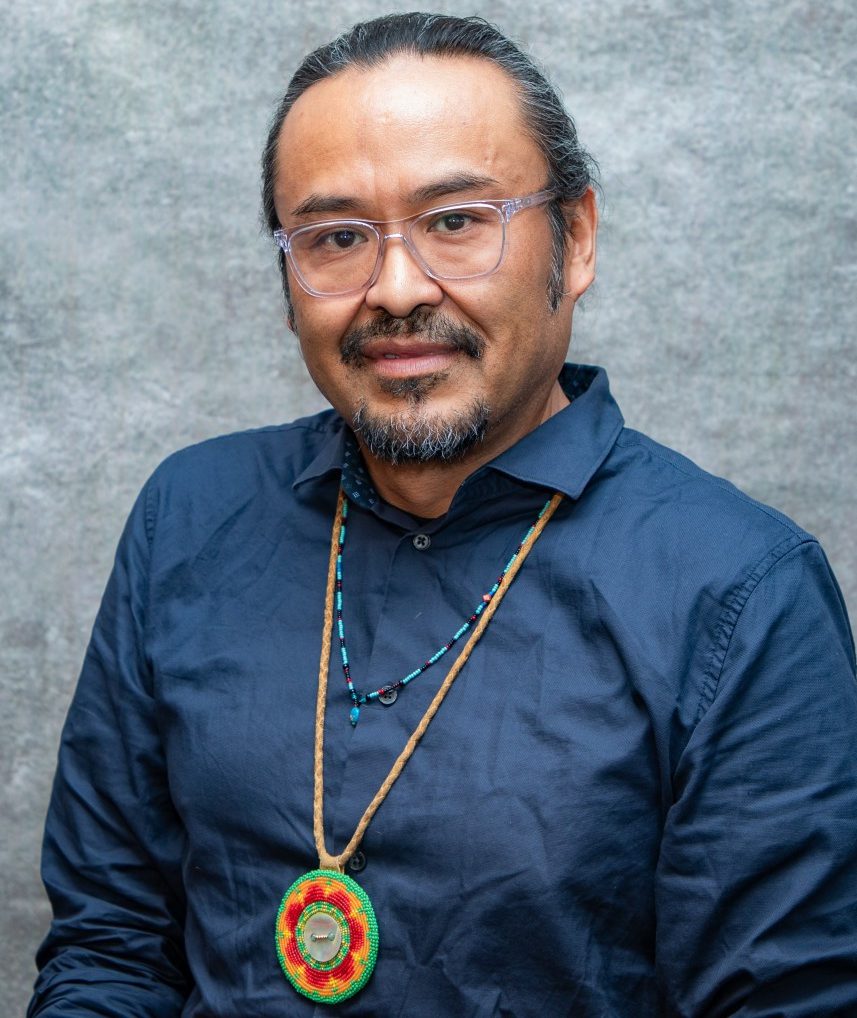
Meet Dëneze Nakehk’o, Chair, Indigenous Knowledge Holders Council

Dëneze Nakehk’o is a Dehcho and Denesuline Dene from Łı́ı́dlı̨ı̨ Kų́ę́ First Nation (Fort Simpson, NT). A well-known Indigenous activist, communicator and intellectual in the Northwest Territories, he gained widespread recognition as a founding member of Dene Nahjo in 2012: a non-government organization working to advance Indigenous leadership and cultural resurgence through land-based education and community building. Mr. Nakehk’o is a passionate advocate for Indigenous knowledge systems, cultural revitalization, and self-determination.

He has an extensive background in northern media, including with APTN and CBC, and developed and co-hosted the podcast Operation Morning Light. His media experience includes work as a video journalist, time as Program Manager with CKLB Radio, and hosting various radio and TV news shows. He also served as Director of Policy and Communications with the NWT Department of Aboriginal Affairs and Intergovernmental Relations.

Mr. Nakehk’o is a firm believer in the value that Indigenous values, traditions, languages, and worldviews have in education. On the role of the Indigenous Knowledge Holders Council, he says “We are breaking trail in the deep woods of post-secondary institutions. Aurora College has established itself with an elevated way of governance. For the first time, Indigenous peoples are not just recommending or advising the College, we have a legislated say in making decisions. We are honoured to continue our strong traditions but also to endeavour in the careful progress of planning and visioning for the College and all of the peoples walking their own educational pathways.”

His dedication to Indigenous education is also apparent in his role as a Research Fellow with the Yellowknife Institute, an Indigenous-led research and education centre within the Faculty of Arts at Toronto Metropolitan University, and his previous work as Indigenous Cultural Coordinator with Sir John Franklin School and St. Patrick’s High School in Yellowknife. Currently, Mr. Nakehk’o is Community Wellness Coordinator with Łı́ı́dlı̨ı̨ Kų́ę́ First Nation.

His work has also been recognized with two NWT Premier’s Awards, and the King Charles Coronation Medal.

Kenny Ruptash, Aurora College’s Board of Governors Chair

Kenny Ruptash has spent much of his life building both his career and his family in the Northwest Territories. As President of Nahanni Construction Ltd. and through more than 20 years of experience in mining, construction, and project finance, Kenny has developed a deep understanding of the full project lifecycle—from feasibility and design to construction and closure. His leadership in the business sector has successfully delivered multi-million-dollar projects in remote northern locations, with an emphasis on cost control, risk management, and operational efficiency.

Through his work and life experience, Mr. Ruptash has built a strong professional network and established lasting relationships with Indigenous governments, local organizations, and industry partners across northern jurisdictions. He is passionate about ensuring that post-secondary education is practical, accessible, and directly aligned with regional employment opportunities.

As Chair of the Board of Governors, his vision for Aurora College includes integrating technical training, applied research, and Indigenous knowledge systems to meet the specific needs of the North. He envisions Aurora College’s transition to a polytechnic as preparing students to lead economic and socio-economic development across the region.

Mr. Ruptash believes that northern post-secondary education should set up students with practical skills and real-world experience to excel in industries such as construction, mining, health, and technology.

His leadership emphasizes the importance of strong partnerships between education, industry, and Indigenous organizations. He is committed to ensuring that Aurora College continues to collaborate with local businesses and industry leaders to design programs that respond directly to the region’s evolving needs. From student internships to community-driven research initiatives, these partnerships provide students with invaluable experience while contributing to the sustainable growth of the North.

Under Mr. Ruptash’s role as Chair, Aurora College aims to strengthen its role as a leading institution for northern education, research, and workforce development. The Board of Governors will remain focused on fostering an inclusive, forward-thinking approach to governance that ensures Aurora College remains responsive to the changing needs of the North.